If you are reading this, you are likely to be standing in a quiet house that smells faintly of mothballs and pot roast. You are staring into a China cabinet filled with dishes that have sat behind glass for forty years. In your hands, you might be holding a single teacup, turning it over to look for a maker’s mark you don’t understand.
You aren’t just looking at porcelain. You are looking at holiday’s past, at a wedding registry from 1952, at the set your grandmother saved up for months to buy. It represents her taste, her sacrifice, and her pride.
And now, you have a decision to make that feels impossible: What happens to this if I don’t keep it?
If you are considering hiring an estate sale company, the fear that your family heirlooms will be treated like discarded junk at a weekend flea market is likely the only thing holding you back. You’ve heard horror stories. You imagine strangers pawing through delicate bone China, chipping the gold rims, or—worse—the sale ending and whatever remains being unceremoniously dumped into a trash compactor.
As an estate sale company that has handled many homes, we want to pull back the curtain on that process. We want to show you exactly what happens to the items that don’t sell, particularly the ones that hold the most sentimental weight. Because the answer isn’t “the dumpster.” The answer is far more respectful, strategic, and dignified than you might imagine.
Let’s walk through the journey of Grandma’s China, step by step.
Phase 1: The Consultation—Where We Separate Value from Sentiment
Before a single item is priced or a single sign is posted, we sit down with you in that home. Usually, this is the first time a family has allowed themselves to really look at the accumulation of a lifetime.
During this consultation, we do something that many families are too overwhelmed to do for themselves: we sort.
We walk through the home with you and separate items into three categories. We call this the “Three-Pile Promise.”
- The Keep Pile: This is yours. These are the irreplaceable items—the photo albums, the christening gown, the quirky salt and pepper shakers you remember playing with as a child. We explicitly tell families: Do not let us sell what you are not ready to let go of. We are here to liquidate assets, not to strip you of your memories.
- The Heirloom Pile: This is for the pieces that have monetary or historical value but that you don’t have room for. Perhaps a cousin wants the dining table. Perhaps a grandchild wants the silver service. We help you identify which pieces are worth keeping in the family, even if they leave this house.
- The Estate Pile: Everything else. This is what we will manage for you.
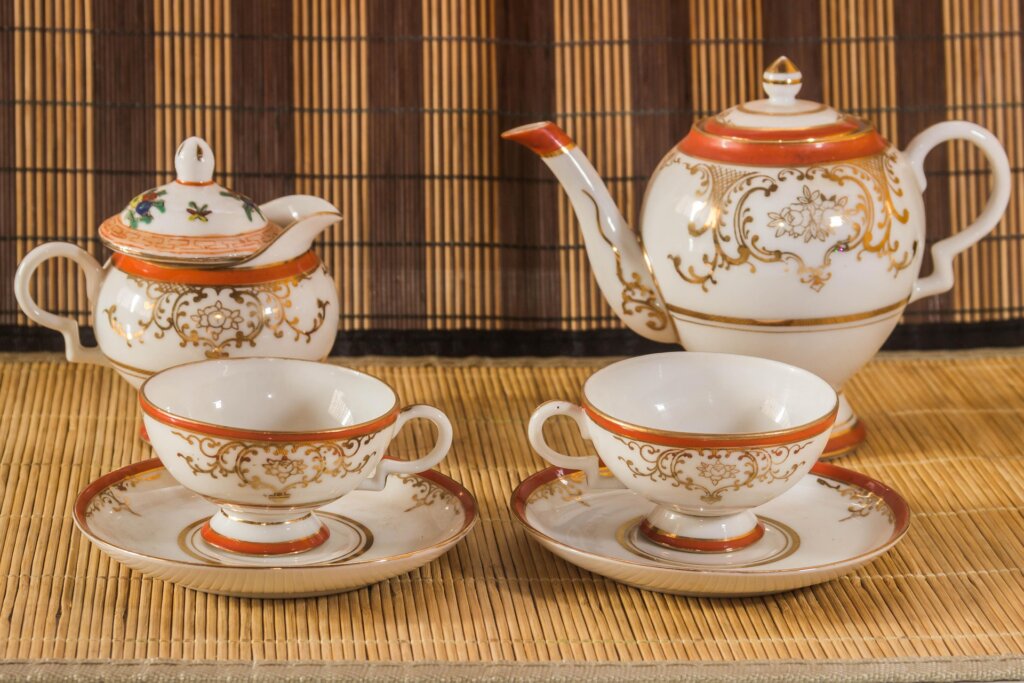
Regarding the China: if you tell us that the Lenox nautilus shell pattern was your grandmother’s pride and joy, but you live in a studio apartment in the city and simply cannot store 12 place settings for 24 people, we take a deep breath with you. We acknowledge the weight of that decision. And then we make you a promise about how we will handle it.
https://estatesalesmadeeasy.com
Phase 2: The Pricing Philosophy—Honoring the Object
Once we take possession of the items, the first thing we do is research. We don’t slap a $5 sticker on a set of Noritake just to move it quickly. Our reputation depends on getting the maximum value for your family, but it also depends on treating items with the respect they deserve.
When we handle Grandma’s China, we look for:
- Maker’s marks: Is this Royal Doulton? Spode? Limoges? A rare pattern can hold significant value.
- Completeness: Is it a full 8-person service? Are there serving platters, the gravy boat, the soup tureens? Complete sets sell for more than mismatched pieces.
- Condition: Has it been lovingly used, or has it sat untouched for 50 years?
We price items fairly based on current market value, not what it cost in 1965. We know that a complete set of fine China might retail for $2,500 in an antique mall, but in an estate sale, it will likely sell for $500 to $1,200 depending on the brand and pattern. We are transparent with you about this pricing strategy from day one.
We also stage the China properly. We don’t pile it on a folding table. We clean the China cabinet. We arrange the settings as your grandmother would have wanted them—meticulously, beautifully. We hang a small sign next to the cabinet that tells the story: “Vintage Lenox, owned by the original owner since 1958.”
Why do we do this? Because buyers are not just looking for dishes. They are looking for history. When we treat the China like a treasure, buyers treat it like a treasure.
Phase 3: The Sale—Finding the Right Steward
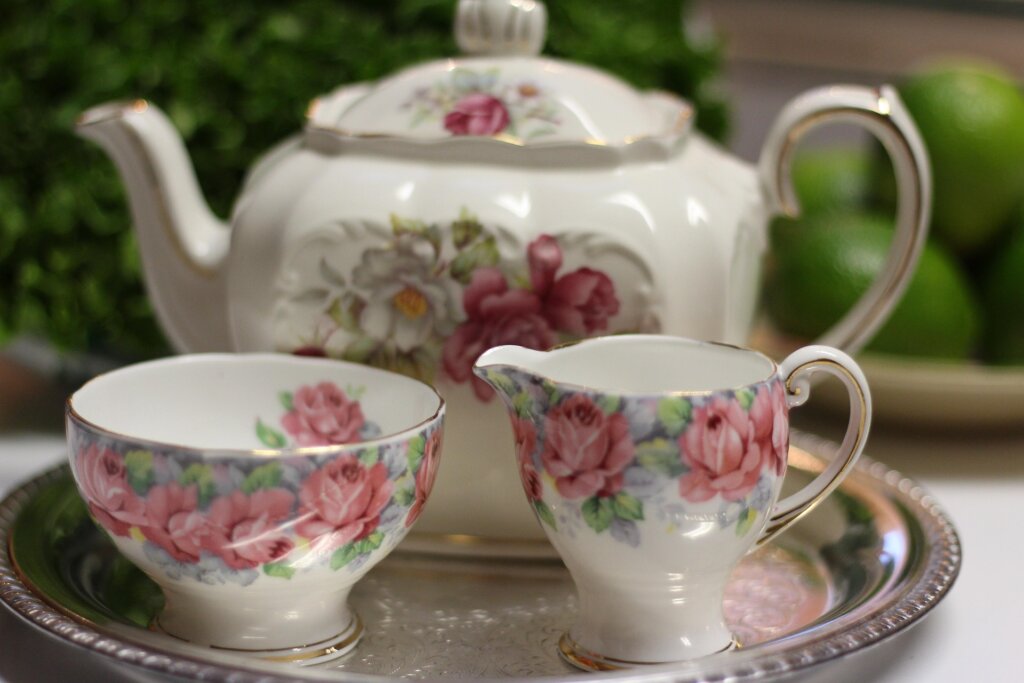
Here is a truth that might surprise you: The vast majority of fine China does not sell during the estate sale.
This isn’t a failure of marketing. It’s a reflection of changing times. Younger generations often don’t have the space or the lifestyle for formal dining sets. They want mid-century modern furniture and cast-iron skillets. The China cabinet is often the last thing to go.
But this is where our process differs dramatically from what you might expect.
We don’t panic if the China doesn’t sell on Saturday. We know the right buyer exists; they just haven’t walked through the door yet.
During the sale, we do three things to try to find a home for China:
- We answer questions. If a shopper pauses at the cabinet, we tell them the story. We mention that it came from a local family, that it was well-cared for, that it’s a hard-to-find pattern.
- We bundle. Sometimes a buyer hesitates at the price of the full set. We offer to sell the set at a slight discount on last day of the sale afternoon to move it.
- We network. Our regular buyers, the antique dealers and collectors—know that we handle high-quality estates. If we have a set of Haviland or Wedgwood, we often text photos to specific collectors before the sale even ends.
But let’s be realistic. In 2026, the market for formal China is a fraction of what it was in 1984. There is a very real chance that at 4:00 PM on Saturday, when the sale concludes, that China cabinet is still full.
Let me take a moment of a different sort. We try to find out from you or someone in the family the story, or memories of as many items that are for sale. There are times when a buyer eventually purchases an item, after they take the time to process the story behind the item. It happens many times for different items.
So now we arrive at the question you’ve been dreading: What happens next?
Phase 4: The Aftermath—Three Pathways for Unsold Items
When the last shopper leaves and the doors close, the work isn’t over. We don’t simply lock the door and walk away. We enter what we call the “Resolution Phase.” For items like Grandma’s China, we have three pathways, and all of them avoid just throwing it away at all costs.
Pathway 1: The Consignment Partnership
We have cultivated relationships with local antique malls, consignment shops, and specialty dealers who focus specifically on fine China, crystal, and silver.
If your China doesn’t sell during the estate sale, we do not simply abandon it. We carefully wrap each piece—the plates, the cups, the saucers, the serving bowls—in packing paper. We transport them to a trusted consignment partner who specializes in formal dining ware.
These shops have a different clientele than our estate sales. They attract collectors and interior designers who are specifically looking for discontinued patterns to complete their own family sets. An item that sat untouched at the estate sale might sit in a consignment shop for three months, but eventually, a woman from three states away will find it online. She will call the shop, pay for shipping, and that gravy boat will become the missing piece in her family’s history.
This process generates a secondary source of income for your family. It’s slower, but it honors the value of the items. We manage this logistics, so you don’t have to.
Pathway 2: The Charitable Donation (With a Tax Advantage)
Sometimes, even the consignment shops are saturated with a particular pattern. Sometimes the China is not a high-value brand, but it is still beautiful and usable.
In these cases, we coordinate donations to reputable local charities. We are not talking about dropping boxes off at a crowded thrift store loading dock. We work with organizations like:
- Habitat for Humanity ReStores: They sell home goods to fund housing projects.
- Domestic violence shelters: Many shelters help women furnish new apartments as they rebuild their lives. A set of dishes—even if it isn’t fine China—represents dignity and a fresh start.
- Senior living facilities: We often donate full place settings to assisted living communities where residents have limited resources. Note: When we have been able to donate to senior centers, it gives the residents a sense of dignity as they may well have used some similar pieces in their lifetimes.
We provide you with a detailed inventory for tax deduction purposes. According to IRS guidelines, you can often deduct the fair market value of donated goods. While it isn’t the same as a cash sale, it provides a financial benefit while ensuring the items go to a good home.
Pathway 3: The Family Option
Before we ever donate or consign anything, we circle back to you.
Sometimes, seeing the China not sell makes the reality of letting it go feel different than it did during the consultation. We give you a courtesy call: “The sale is over. The China is still here. We are preparing to move it tomorrow. Is there any chance you want it after all?”
We have had families change their minds at this stage. We have had siblings decide to split the set, each taking a few place settings as mementos. We have had cousins come out of the woodwork who suddenly have room for the dining room table they swore they didn’t want.
We never force liquidation. The goal is resolution, not just removal.
What We Absolutely Do NOT Do
To put your mind at ease, let’s be explicit about what does not happen to Grandma’s China when you hire a reputable estate company.
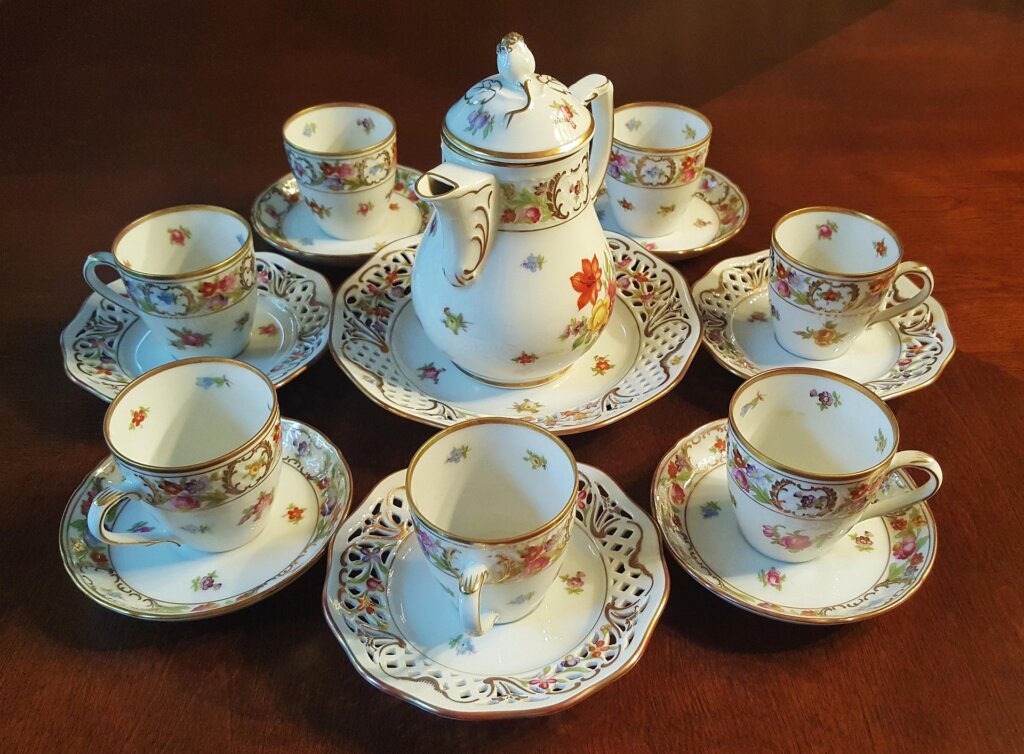
- We do not throw it away. Fine China is not trash. Even if it has no value for sale, it is still a durable good that can serve a family for another century. We find it a home.
- We do not smash it for “content.” You may have seen viral videos of liquidators destroying unsold items for social media views. This is exploitative and disrespectful. We are not that company.
- We do not leave it for the real estate agent to deal with. When we leave a home, it is “broom clean.” There are no lingering obligations for you or the new homeowners.
A Note on Emotional Weight
We want to address something that isn’t often talked about in the estate sale industry: guilt.
We see it in your eyes when we talk about the China. You feel like you are betraying your grandmother by letting “her things” go to strangers. You worry that you are erasing her legacy.
We want to offer a reframe.
Your grandmother didn’t buy that China because she wanted it to sit behind glass forever. She bought it to bring people together. She bought it to host Thanksgiving dinners and bridge club afternoons. The legacy isn’t in the porcelain; it’s in the act of hospitality.
When we find a new home for that China—whether it’s a young couple who just got engaged and wants to start their own tradition, a collector who needs one piece to complete a set, or a family rebuilding their life after hardship—we are continuing that legacy. The dishes are being used again. They are gathering people around tables again.
That is not erasure. That is preservation of purpose.
The Bottom Line: Your Peace of Mind
Hiring an estate sale company is about more than just getting rid of stuff. It’s about transferring the burden of doing so ethically and thoroughly.
When you handle the estate yourself, you are faced with impossible choices:
- Do I rent a dumpster and throw away items that might be worth money?
- Do I have a garage sale and watch strangers lowball me for my mother’s wedding China?
- Do I pack it all up and move it to storage, paying $200 a month to avoid making a decision?
When you hire us, you are hiring a team that will treat your family’s belongings with the respect they deserve—from the pricing stage all the way through to the final resolution.
We will find a home for China. It may be through a sale, through a consignment partnership, or through a donation that helps a family in need. And you will not be left standing in an empty house, wondering if you did the right thing.
Ready to Let Go Without the Guilt?
If you are standing in a home filled with beautiful things that you simply cannot keep, we are here to help.
We handle the logistics, the pricing, the marketing, and the emotional weight of the process so you can focus on what matters most: remembering the person who lived there, not just managing their stuff.
We offer a free, no-obligation consultation where we walk through the home with you, answer your questions about the process, and provide a transparent plan for how we will handle every item—from the valuable collectibles to the everyday dishes.
Contact us today to schedule your consultation. Let us show you how an estate sale can be a dignified, respectful, and even joyful experience.
Because the things your family loved, deserve a respectful goodbye.
https://estatesalesmadeeasy.com